
Shortbread cookies are one of those baked goods that feel like a warm hug from the kitchen. There’s a simplicity to them that makes you reach for the butter and sugar without hesitation, but I love adding that tiny pinch of smoked sea salt. It’s a subtle twist that catches people off guard in the best way, kind of like a secret handshake.
Baking these cookies is less about precision and more about feeling your way through the dough—pressing it into the pan, watching the edges turn a light golden, and smelling that rich, buttery aroma fill the room. It’s a comforting ritual, especially when you want something familiar but with just a whisper of something unexpected.
This recipe feels like a little rebellion against overly complicated baking. It’s straightforward, honest, and relies on a handful of good ingredients. The smoked sea salt elevates the humble shortbread into a treat that’s both nostalgic and intriguingly modern, perfect for sharing or keeping all to yourself.
Using a pinch of smoked sea salt to add a subtle, unexpected depth to traditional shortbread cookies.
The story behind this recipe
I first started playing with shortbread when I found an old tin of butter in the back of my pantry. The smell of melting butter and vanilla always takes me back—those quiet afternoons baking with my grandma. It’s funny how a simple cookie can carry so much history and comfort. Over the years, I’ve tweaked the basic recipe, trying to find that perfect balance of crumbly richness and just enough sweetness to feel indulgent without being cloying. This version, with a pinch of smoked sea salt, felt like a small rebellion—adding depth without complicating the process. Every batch reminds me that good baking is often about respecting the basics, then giving them a tiny twist.
Ingredient breakdown
- Unsalted butter: I use cold, high-fat European butter for a rich, melt-in-your-mouth texture. You can try salted butter, but reduce the salt in the dough to balance.
- Sugar: I prefer superfine sugar because it dissolves quickly, giving that smooth, tender crumb. Regular granulated works fine if you blitz it briefly in a food processor.
- Flour: I stick with all-purpose flour; it’s reliable and creates that tender, crumbly bite. For a slightly denser cookie, try using part rice flour for a delicate crunch.
- Salt: Just a pinch of smoked sea salt adds a subtle smoky depth that surprises. Regular sea salt is fine, but skip table salt for a cleaner, less harsh flavor.
- Vanilla: I love a splash of pure vanilla extract for warmth and aroma. For a twist, try almond extract, but go light—it’s potent and can overpower.
- Optional add-ins: Sometimes I toss in a handful of chopped pistachios or a few lemon zest strips—adds texture and brightness, making each batch uniquely yours.
- Eggs or dairy: This recipe is all about butter, but a tiny egg yolk can add a touch of richness if you want a slightly softer crumb—just don’t overdo it.
Spotlight on key ingredients
Unsalted butter:
- I use cold, high-fat European butter for a rich, melt-in-your-mouth texture. You can try salted butter, but reduce the salt in the dough to balance.
- Sugar: I prefer superfine sugar because it dissolves quickly, giving that smooth, tender crumb. Regular granulated works fine if you blitz it briefly in a food processor.
- Flour: I stick with all-purpose flour; it’s reliable and creates that tender, crumbly bite. For a slightly denser cookie, try using part rice flour for a delicate crunch.
Vanilla:
- Salt: Just a pinch of smoked sea salt adds a subtle smoky depth that surprises. Regular sea salt is fine, but skip table salt for a cleaner, less harsh flavor.
- I love a splash of pure vanilla extract for warmth and aroma. For a twist, try almond extract, but go light—it’s potent and can overpower.
Notes for ingredient swaps
- Dairy-Free: Swap butter for coconut oil or a dairy-free margarine. Expect a slightly lighter, less rich crumb, but still satisfyingly crisp.
- Sugar Alternatives: Use honey or maple syrup instead of superfine sugar. The cookies will be a tad softer and have a richer aroma.
- Flour Variants: Whole wheat or spelt flour can replace all-purpose flour. They add nuttiness and a denser texture, so expect a more rustic cookie.
- Salt: Replace smoked sea salt with regular sea salt or fleur de sel. The flavor will be less smoky but still enhance the buttery richness.
- Vanilla: Use vanilla bean paste or extract, or try almond extract for a different aromatic twist. Be mindful of potency, add gradually.
- Add-ins: Incorporate finely chopped nuts, dried fruit, or citrus zest for texture and flavor variation. Adjust baking time if adding heavy ingredients.
- Eggs or Dairy: A small egg yolk can be added for extra tenderness, but skip if you want an entirely butter-based cookie.
Equipment & Tools
- Mixing bowl: Combine ingredients evenly and start the dough.
- Spatula or hand mixer: Cream butter and sugar to incorporate air for tenderness.
- Rolling pin: Roll dough to uniform thickness for even baking.
- Cookie cutter or knife: Shape the cookies consistently.
- Parchment paper: Prevent sticking and facilitate easy cleanup.
- Baking sheet: Hold cookies during baking and ensure even heat distribution.
Step-by-step guide to shortbread
- Gather your equipment: a mixing bowl, a sturdy spatula, a rolling pin, and a cookie cutter or knife for shaping. Preheat your oven to 160°C (320°F) and line a baking sheet with parchment paper.
- In a large bowl, combine 1 cup (225g) of unsalted butter softened at room temperature with 1/2 cup (60g) of superfine sugar. Mix until the mixture is light, fluffy, and pale—about 2-3 minutes with a spatula or hand mixer on low speed.
- Add 2 cups (240g) of all-purpose flour, a pinch of smoked sea salt, and 1 teaspoon of vanilla extract. Gently fold the dry ingredients into the butter mixture, just until combined. The dough should come together easily but not be sticky.
- Turn the dough onto a lightly floured surface. Using a rolling pin, roll it out to about 1/4 inch (0.6cm) thick. If the dough cracks or crumbles, refrigerate it for 10-15 minutes to firm up.
- Cut into your preferred shapes—circles, rectangles, or squares. Place the cookies on the prepared baking sheet with a little space between each. Chill the cut cookies for 10 minutes to prevent spreading.
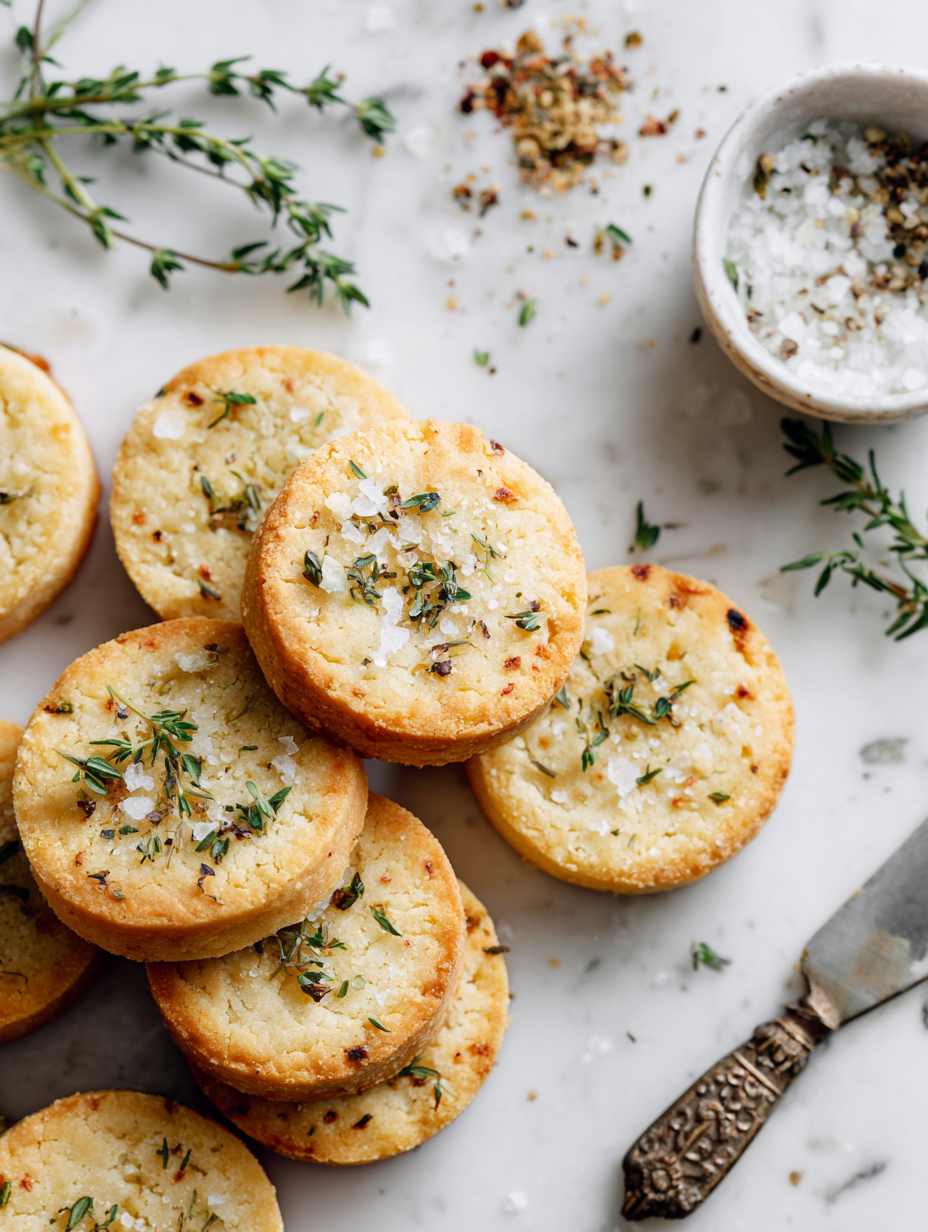
- Bake in the preheated oven for 15-18 minutes, or until the edges turn a light golden brown. The smell of butter and vanilla should fill your kitchen, and the cookies will look slightly firm but still tender.
- Remove from oven and let the cookies rest on the sheet for 5 minutes. Then transfer to a wire rack to cool completely. They’ll firm up a bit as they cool, developing their signature crumbly texture.
- Once cooled, serve immediately or store in an airtight container at room temperature for up to a week. For longer storage, freeze the cookies for up to 3 months, wrapped well to prevent freezer burn.
Let the cookies cool completely on a wire rack before serving. Store in an airtight container at room temperature for a week, or freeze for longer freshness.
How to Know It’s Done
- Edges are lightly golden and firm to the touch.
- Cookies have a delicate, crumbly texture when broken.
- A gentle aroma of butter and vanilla lingers in the air.
Smoked Sea Salt Shortbread Cookies
Ingredients
Equipment
Method
- Combine the softened butter and superfine sugar in a large mixing bowl, then beat with a spatula or hand mixer until the mixture is light, creamy, and slightly paler in color, about 2-3 minutes, filling the kitchen with a sweet, buttery aroma.
- Gently fold in the sifted all-purpose flour, a pinch of smoked sea salt, and vanilla extract, mixing just until the dough begins to come together and feels soft but not sticky, resembling thick cookie dough.
- Turn the dough out onto a lightly floured surface and gently knead it a few times to bring it together into a smooth ball. Wrap in plastic wrap and refrigerate for 15-20 minutes to make it easier to roll out.
- Once chilled, unwrap the dough and roll it out evenly to about 1/4 inch (0.6 cm) thickness using a rolling pin, aiming for a smooth, flat surface with no cracks or cracks just beginning to form.
- Cut the dough into your desired shapes using a cookie cutter or knife, then carefully transfer the cut cookies onto a parchment-lined baking sheet, leaving space between each for spreading. Chill the cut cookies for 10 minutes to help them hold their shape during baking.
- Bake in a preheated oven at 160°C (320°F) for about 15-18 minutes, or until the edges are a light golden brown and fragrant. You’ll notice a rich, buttery smell filling the air as the cookies develop their delicate crust.
- Remove the baking sheet from the oven and let the cookies rest for about 5 minutes, allowing them to firm up slightly. Then, transfer the cookies to a wire rack to cool completely, which helps preserve their crumbly texture.
- Once cooled, serve the cookies immediately or store them in an airtight container at room temperature for up to a week. Their crumbly, melt-in-your-mouth texture and smoky salt flavor make them a delightful treat anytime.
Pro tips for perfect shortbread
- Bolded mini-head: Chill dough briefly → Keeps cookies from spreading too much during baking.
- Bolded mini-head: Use cold butter → Creates a tender, flaky texture that melts in your mouth.
- Bolded mini-head: Watch for golden edges → Signals perfect doneness, avoid overbaking for crumbly texture.
- Bolded mini-head: Lightly flour surface → Prevents sticking and cracking when rolling out the dough.
- Bolded mini-head: Chill cut cookies → Helps maintain shape and prevents spreading in the oven.
- Bolded mini-head: Slightly underbake → Ensures a tender crumb, as cookies firm up upon cooling.
- Bolded mini-head: Add a pinch smoked salt → Enhances flavor with a subtle smoky note that surprises.
Common mistakes and how to fix them
- FORGOT to check oven temperature → always verify with an oven thermometer.
- DUMPED flour directly into dough → sift or spoon flour to avoid dense cookies.
- OVER-TORCHED edges → remove cookies at first golden edges for perfect crunch.
- UNDERSALTED dough → add a pinch more salt if cookies taste flat.
Quick fixes and pantry swaps
- If cookies spread too much, chill dough for 15 minutes before baking.
- When dough cracks, knead in a tiny splash of cold water to hydrate.
- Splash a few drops of lemon juice into the dough for added brightness.
- Patch cracks in the dough with bits of leftover dough pressed in gently.
- Shield edges from over-browning by tenting with foil midway through baking.
Prep, store, and reheat tips
- Dough can be prepared up to 2 days in advance, wrapped tightly in plastic, and refrigerated. It firms up, making it easier to roll out and cut.
- Store baked cookies in an airtight container at room temperature for up to a week. They stay crisp and buttery, with a slight mellowing of the vanilla aroma over time.
- Freeze unbaked or baked cookies for up to 3 months. Wrap well to prevent freezer burn, and thaw at room temp for 10 minutes before serving.
- Reheat baked shortbread briefly in a 150°C (300°F) oven for 3-5 minutes to refresh their crispness, and enjoy that freshly baked smell again.
Top questions about shortbread cookies
1. Should I use softened or cold butter?
Use cold, high-quality butter for the best crumb and flavor. Softened butter makes mixing easier but can affect texture.
2. Can I make this recipe dairy-free?
Yes, you can substitute with non-dairy fats like coconut oil, but expect a slightly different texture and flavor profile.
3. How long should I chill the dough?
Chill the dough for at least 30 minutes before baking to prevent spreading and improve texture.
4. How do I know when the cookies are done?
Bake until the edges are just golden, about 15 minutes at 160°C (320°F), for tender, crumbly cookies.
5. Can I use regular sugar instead of superfine?
Use superfine sugar for a smoother, melt-in-your-mouth crumb. Regular granulated works but may give a grittier texture.
6. What does smoked sea salt do for the cookies?
Add a pinch of smoked sea salt to introduce a subtle smoky depth that elevates the simple flavor.
7. How should I store shortbread cookies?
Store baked cookies in an airtight container at room temperature for up to a week. Freeze for longer storage.
8. Can I add eggs or milk to the dough?
For a more tender cookie, add a tiny egg yolk or a splash of milk to the dough.

9. What if my cookies spread too much?
If cookies spread too much, chill the cut shapes for 10 minutes before baking to help them keep shape.
10. How do I prevent overmixing?
Use a light hand when mixing dry ingredients to avoid overworking the dough, which can make cookies tough.
Making these shortbread cookies is a quiet act of rebellion against the busy pace of life. The buttery scent filling your kitchen as they bake feels like a small, satisfying victory. They’re simple, honest, and just a little special—perfect for those moments when you need a break.
In the end, it’s about the process—measuring, mixing, and patiently waiting for that perfect golden edge. These cookies remind me that sometimes, the most unassuming treats hold the most comfort and quiet joy.

Hi, I’m Charlotte Hayes, the creator and storyteller behind Lost in the Aroma. If you’ve ever closed your eyes while something simmered on the stove just to take in the scent, then you already understand what this space is about. For me, aroma is memory. It is emotion. It is the first sign that something beautiful is about to be shared. Lost in the Aroma is where I bring together recipes, sensory storytelling, and my lifelong love for food. I am so glad you’re here.

Leave a Reply